
Are Corinth Encore Worktops Easy to Maintain?
Are Recycled Glass Worktops Eco-Friendly

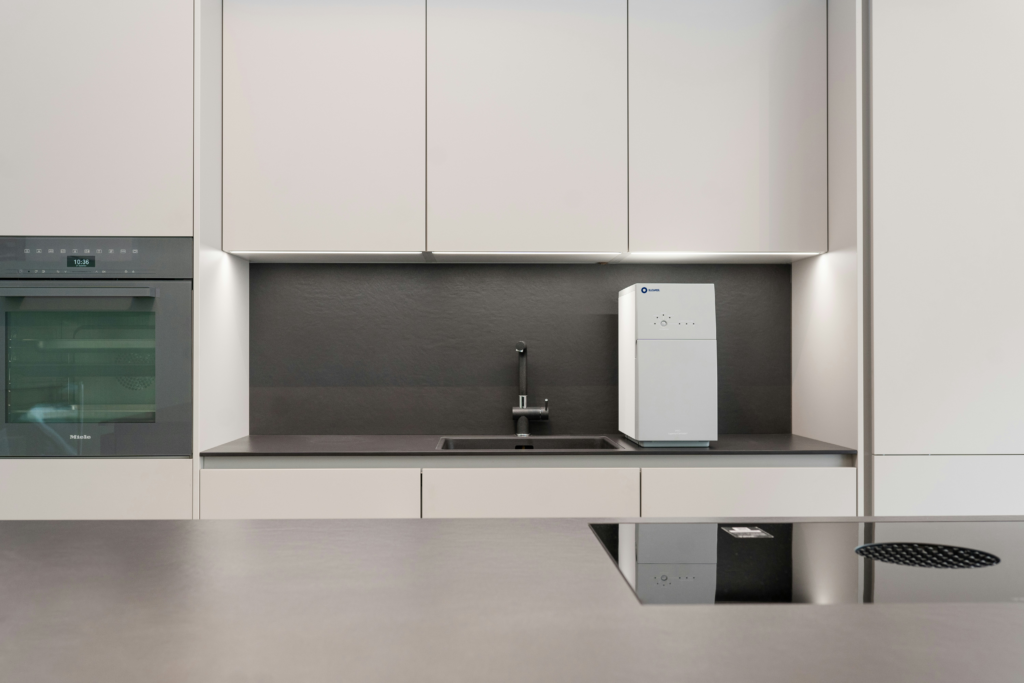
Everything homeowners need to know about Corian worktops, including how they perform against heat, scratches, daily wear and tear, and whether they’re the right choice for a busy kitchen.
When homeowners start researching kitchen worktops, the conversation usually begins with appearance. People are naturally drawn to colours, patterns, edge profiles and overall design. However, once the excitement of planning a new kitchen settles in, the practical questions start to emerge.
Will it stand up to daily use?
Can it cope with a busy family kitchen?
What happens if someone accidentally puts a hot pan down?
Will it still look good in five or ten years?
These are sensible questions because a kitchen worktop isn’t simply a design feature. It’s one of the hardest-working surfaces in the home. Every day it is exposed to cooking, cleaning, food preparation, family life and the occasional accident.
Corian has been one of the most recognised solid surface worktop materials for decades because it offers a combination of aesthetics, hygiene, versatility and durability that appeals to many homeowners. Yet despite its popularity, there are still misconceptions about how it performs when exposed to heat and scratches.
Some people assume Corian scratches easily because it isn’t natural stone. Others believe it cannot tolerate heat at all. In reality, the truth sits somewhere between these extremes.
Corian is both heat resistant and scratch resistant, but it is not heatproof or scratch proof. Understanding that distinction is essential when deciding whether it is the right choice for your home.
In this guide, we’ll explore Corian’s heat resistance, scratch resistance, repairability, long-term durability and maintenance requirements to help you make an informed decision.
What Is Corian?
Corian is a solid surface material manufactured using a combination of acrylic resin and natural minerals.
Unlike laminated products that have a decorative surface layer applied to a core material, Corian is consistent throughout its thickness. This means the colour and composition run through the entire slab.
This characteristic provides several important advantages:
- Seamless fabrication
- Repairability
- Consistent appearance
- Design flexibility
- Long-term durability
Corian is commonly used for:
- Kitchen worktops
- Kitchen islands
- Splashbacks
- Utility rooms
- Bathrooms
- Commercial interiors
- Healthcare facilities
- Hospitality environments
One of the reasons Corian has remained popular for so many years is its versatility.
Fabricators can create:
- Seamless joins
- Integrated sinks
- Curved designs
- Waterfall islands
- Bespoke edge profiles
- Continuous worktop runs
This level of flexibility makes it difficult to compare directly with many traditional worktop materials.
Why Heat Resistance Matters More Than Most Homeowners Realise
Heat exposure is one of the most common causes of worktop damage across all material categories.
In a typical kitchen, worktops are exposed to:
- Saucepans
- Frying pans
- Roasting trays
- Air fryers
- Slow cookers
- Coffee machines
- Kettles
- Steam
- Heated serving dishes
Even careful homeowners occasionally place something hot on a worktop without thinking.
Common examples include:
- A tray removed from the oven and placed on the nearest surface
- A hot pan rested briefly while serving food
- An air fryer directing heat repeatedly onto the same area
- A slow cooker operating for hours in one location
These everyday situations explain why heat resistance is such an important factor when choosing a worktop.
Is Corian Heat Resistant?
Yes, Corian is heat resistant.
It can comfortably handle the temperatures associated with normal kitchen activities and everyday cooking.
However, heat resistant is not the same as heatproof.
Corian is designed to withstand routine kitchen use, but excessive direct heat can damage the material.
Examples of potentially damaging situations include:
- Placing a hot cast-iron pan directly on the surface
- Resting roasting trays straight from the oven onto the worktop
- Putting pizza stones or baking stones directly on the surface
- Exposing one area to repeated concentrated heat
In these circumstances, Corian may experience:
- Discolouration
- Surface damage
- Thermal shock
- Cracking
- Permanent marks
Because Corian contains acrylic components, it reacts differently to extreme heat than natural stone materials such as granite.
This does not mean Corian performs poorly. It simply means homeowners should understand its limitations and use it appropriately.
Understanding Thermal Shock
One aspect of heat resistance that is often overlooked is thermal shock.
Thermal shock occurs when a material experiences a sudden and significant temperature change.
Examples include:
- A very hot object placed on a cooler surface
- Rapid heating followed by rapid cooling
- Concentrated heat exposure in one location
Repeated thermal shock can increase the risk of damage over time.
This is one reason why manufacturers recommend using trivets, heat mats and pan stands.
How Corian Compares to Quartz for Heat Resistance
Many homeowners compare Corian directly with quartz.
Quartz generally offers stronger resistance to high temperatures.
However, there is an important consideration.
If quartz suffers thermal damage, repair options are often limited.
Corian, on the other hand, can frequently be repaired and refinished.
When comparing materials, homeowners should consider:
- Resistance to damage
- Ease of repair
- Long-term maintenance
- Ownership costs
- Lifespan
The most heat-resistant material is not always the most practical choice over the long term.
Best Practices for Protecting Corian from Heat
Preventing heat damage is straightforward.
Recommended precautions include:
- Always use trivets
- Place hot pans on heat-resistant mats
- Use stands beneath slow cookers
- Protect surfaces from air fryer exhaust heat
- Avoid direct contact with oven trays
- Follow manufacturer care guidelines
These simple habits dramatically reduce the likelihood of heat-related damage.
Real-World Performance Against Heat
In practice, heat damage is relatively uncommon when Corian is used correctly.
Most homeowners naturally use pan stands, chopping boards and protective mats regardless of the worktop material they have chosen.
The majority of heat-related problems occur when:
- Hot cookware is placed directly on the worktop
- Portable appliances generate concentrated heat
- Protective measures are ignored
Interestingly, small appliances often create more problems than cookware.
Air fryers, coffee machines and slow cookers can expose the same area of worktop to repeated heat over long periods.
This is why proper appliance placement is just as important as using trivets for pans.
Why Scratch Resistance Matters
Scratch resistance is another major consideration for homeowners.
Kitchen worktops experience constant physical contact throughout their lifespan.
Daily activities include:
- Chopping vegetables
- Preparing meals
- Moving cookware
- Sliding plates
- Dragging appliances
- Storing kitchen equipment
Every worktop material will show signs of use eventually.
The important question is how visible those marks become and how easy they are to repair.
Is Corian Scratch Resistant?
Yes, Corian is scratch resistant.
For normal household use, it performs very well and maintains its appearance for many years.
However, it is not scratch proof.
Activities that may create scratches include:
- Cutting directly on the worktop
- Dragging ceramic cookware
- Sliding heavy appliances
- Using abrasive cleaning products
- Scrubbing with harsh materials
These risks are not unique to Corian.
Even granite, quartz and porcelain can suffer damage under the wrong conditions.
The key difference is how the material responds after damage occurs.
Understanding Everyday Surface Wear
Many homeowners expect worktops to remain completely unchanged after years of use.
Unfortunately, no material behaves this way.
All worktops gradually develop signs of ownership.
These may include:
- Minor scratches
- Light scuff marks
- Changes in sheen
- Everyday wear patterns
In most cases, these are cosmetic rather than structural issues.
Corian’s biggest advantage is that these signs of wear are often manageable and repairable.
Why Corian’s Construction Makes a Difference
One of Corian’s greatest strengths is that the material is solid throughout.
This means:
- There is no decorative layer to wear through
- Scratches do not expose a different substrate
- Colour remains consistent throughout the slab
- Surface restoration is often possible
By comparison, some materials can reveal underlying layers when damaged.
Corian’s uniform composition helps maintain a consistent appearance over time.
Can Scratches Be Repaired?
This is where Corian stands out from many competing materials.
Minor scratches can often be repaired using:
- Professional polishing
- Surface refinishing
- Specialist restoration techniques
- Light sanding procedures
In many situations, damage that would require replacement in another material can be restored in Corian.
This repairability is one of the primary reasons many homeowners continue to choose Corian despite the availability of harder surfaces.
Long-Term Ownership Benefits
When selecting a worktop, it is important to think beyond installation day.
Many kitchens remain in place for ten, fifteen or even twenty years.
The ability to refresh and restore a worktop can provide significant value over that period.
Benefits include:
- Extended lifespan
- Better appearance retention
- Lower replacement costs
- Improved long-term value
- Greater homeowner satisfaction
A worktop that can be renewed often delivers stronger long-term performance than a harder material that cannot easily be repaired.
Corian in Busy Family Kitchens
Family kitchens present unique challenges.
Children, pets, entertaining and everyday household activity all increase the likelihood of accidents.
Corian performs particularly well in these environments because it offers:
- Easy maintenance
- Hygienic non-porous construction
- Repairability
- Durability
- Seamless fabrication
Many homeowners appreciate knowing that small accidents do not necessarily result in permanent damage.
Corian in Open-Plan Living Spaces
Modern homes increasingly feature open-plan layouts where the kitchen serves as both a functional workspace and a design feature.
Corian works exceptionally well in these settings because it allows:
- Seamless islands
- Integrated sinks
- Large uninterrupted surfaces
- Contemporary aesthetics
- Bespoke design details
For many homeowners, these design benefits are just as important as heat and scratch resistance.
Maintenance Tips for Maximum Performance
To keep Corian looking its best for years to come:
- Use chopping boards during food preparation
- Use heat mats beneath hot cookware
- Clean spills promptly
- Avoid harsh abrasive cleaners
- Follow recommended care instructions
- Protect surfaces from prolonged heat exposure
These simple habits help preserve both appearance and performance.
Common Myths About Corian
Myth: Corian Scratches Easily
Corian can scratch under certain conditions, but normal household use rarely causes significant issues.
Myth: Corian Cannot Handle Heat
Corian handles everyday kitchen temperatures very well. Problems generally occur only when exposed to extreme direct heat.
Myth: Scratches Are Permanent
Many scratches can be repaired through professional refinishing and restoration.
Myth: Corian Requires High Maintenance
Routine cleaning is simple and generally requires only mild cleaning products.
Myth: Stone Is Always More Durable
Durability involves more than hardness. Repairability, hygiene, maintenance and longevity should all be considered.
Corian vs Other Popular Worktop Materials
| Feature | Corian | Quartz | Granite | Laminate |
| Heat Resistance | Good | Very Good | Excellent | Moderate |
| Scratch Resistance | Good | Excellent | Very Good | Moderate |
| Repairability | Excellent | Limited | Limited | Poor |
| Seamless Appearance | Excellent | Limited | Limited | Limited |
| Hygiene | Excellent | Excellent | Good | Good |
| Maintenance | Low | Low | Moderate | Low |
This comparison highlights why Corian remains a popular choice despite increased competition from newer materials.
Pros and Cons of Corian Worktops
Pros
- Good heat resistance
- Good scratch resistance
- Excellent repairability
- Seamless appearance
- Hygienic non-porous surface
- Integrated sink options
- Low maintenance
- Wide design flexibility
- Long lifespan
- Suitable for contemporary kitchens
Cons
- Not completely heatproof
- Not scratch proof
- Requires sensible day-to-day care
- Premium price point compared to some alternatives
Final Verdict: Are Corian Worktops Heat and Scratch Resistant?
Yes, Corian worktops are both heat resistant and scratch resistant, making them an excellent choice for many modern kitchens.
However, it is important to understand that resistant does not mean immune.
Corian is designed to withstand normal kitchen use, but like every worktop material, it benefits from sensible care. Direct contact with extremely hot cookware should be avoided, and chopping boards should always be used during food preparation.
What makes Corian particularly attractive is not simply its resistance to damage but its ability to recover from it. Minor scratches, surface wear and imperfections can often be repaired, helping the worktop maintain its appearance long after installation.
Choose Corian if:
- You want a durable everyday worktop
- You value a seamless appearance
- You appreciate low-maintenance ownership
- You want a repairable surface
- You are planning a long-term kitchen investment
- You prefer contemporary kitchen design
Corian offers an excellent balance of practicality, aesthetics, hygiene and longevity, which explains why it remains one of the most popular solid surface worktop materials available today. For homeowners seeking a stylish and durable kitchen surface that can handle everyday life while maintaining its appearance for years to come, Corian continues to be a strong contender and a worthwhile investment.
